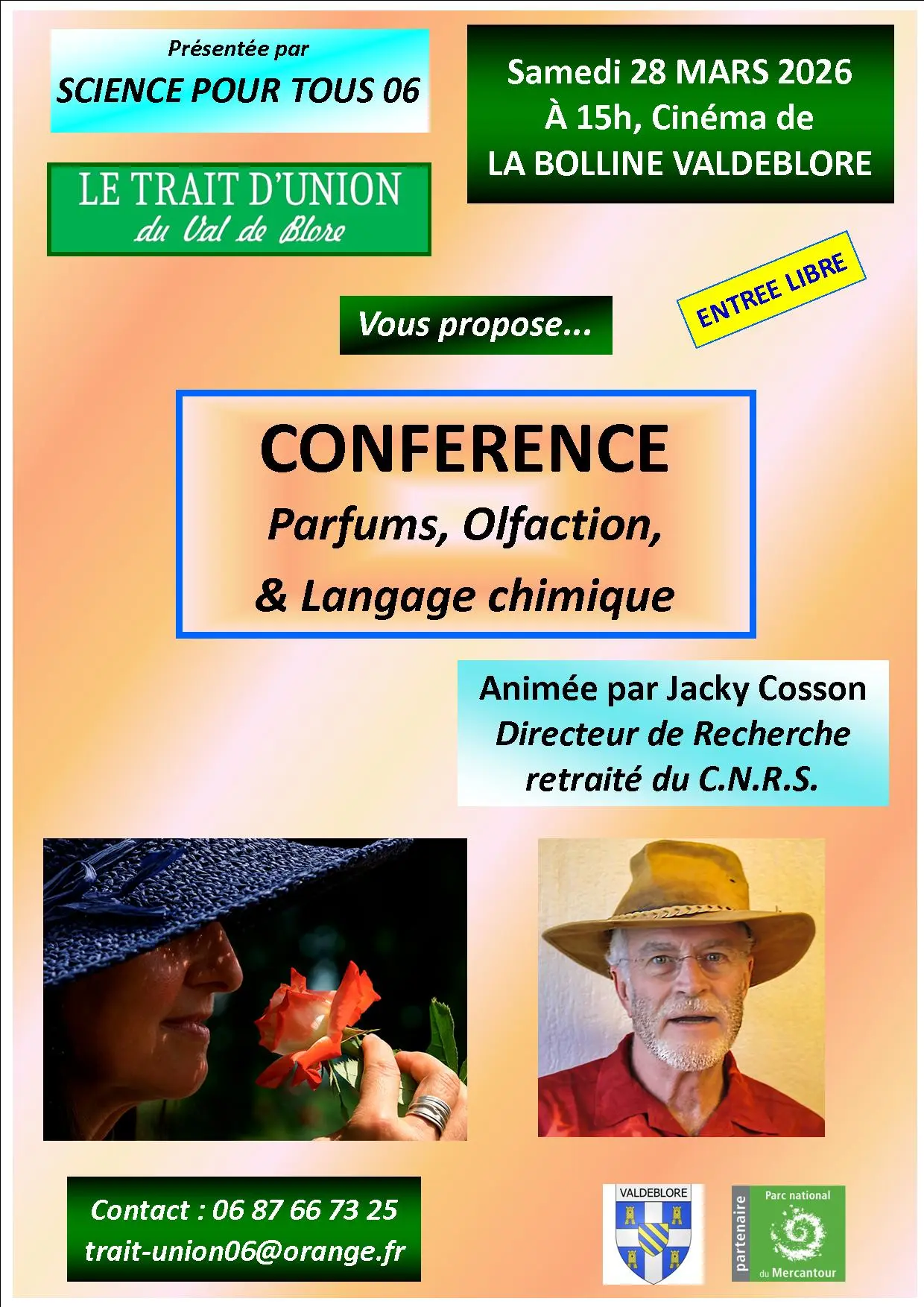
How does the brain apprehend the many scented molecules in a rose, and know that they 'represent' the scent of a rose?
In recent decades, the mechanisms of olfaction have been increasingly understood and clarified in scientific terms:
In the brain (olfactory bulb), different patterns of neuronal activity reflect different odors. Similar odorants initially generate similar patterns, but the olfactory bulb eventually distinguishes between them. This brain region functions like a switch: depending on the concentration of odorants, patterns of neural activity in the brain change abruptly from one state to another.
The speaker will provide an overview of these mechanisms, followed by a more general discussion of the chemical language used in the living world (multicellular animals and plants) to control numerous functions, as well as by many organisms.
Jacky Cosson is a retired director of research at the Centre National de la Recherche Scientifique (CNRS), and was previously assigned to the Station Marine de Villefranche-sur-mer (Université Paris 6-Sorbonne). He trained as a biochemist and biophysicist at Orsay University. His research has focused on the reproduction of animals of various species (fish, jellyfish, sea urchins, oysters, humans, etc.). He is particularly interested in the mechanisms of interaction between gametes, including recognition and approach between male and female gametes. Recently, he has been involved in a number of activities aimed at disseminating scientific culture through debates and discussions.
Read more