



Description
Through a selection of 70 works, this exhibition invites visitors to discover the unique world of Alexander Calder, where color, movement, and balance come together in a resolutely innovative artistic vision.
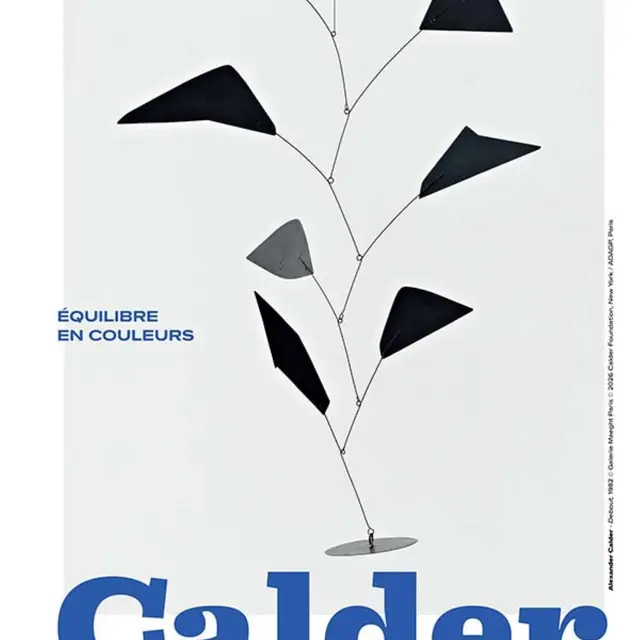
An iconic figure of the 20th century, Alexander Calder (1898–1976) is known for his famous mobiles and stabiles—moving sculptures in which colors seem to float, suspended in midair. His work established itself as a new artistic language in which the concept of balance plays an essential role.
Alongside his sculptures, Alexander Calder developed a significant practice in drawing and painting on paper. Among his favorite techniques, gouache plays a key role, with a palette often centered on primary colors. Later, lithography became a natural extension of his graphic work. This technique was brought to the forefront thanks to his friendship with Aimé and Marguerite Maeght, an iconic couple in the avant-garde art scene and major art patrons.
This exhibition, organized in partnership with the Maeght Foundation, highlights Alexandre Calder’s seminal work as well as his relationship with the Maeghts, whose support played a major role in bringing his work to a wider audience.
Through a selection of 70 works from the collection, this exhibition features gouaches, lithographs, bronzes, ink drawings, and mobiles, revealing the full diversity of a pioneering artist who transformed movement into art and balance into a form of expression.
In partnership with the Maeght Foundation