




Description
Exhibition on the Authion.
The Authion Massif occupies a strategic position and played an important role in the defense of the County of Nice, situated between Savoy and France, from the perspective of both the Piedmontese and the French.
The armies of these two countries clashed there during the War of the Austrian Succession (1744–1748), and again in June 1793.
It was the site of battles during the Revolutionary Wars in 1793 and 1794; Masséna’s French armies attempted to capture it to invade Piedmont during the war against the Austro-Sardinians. After a bloody defeat, a flanking maneuver led by the French forced the Austro-Sardinians to evacuate their defensive positions to avoid encirclement.
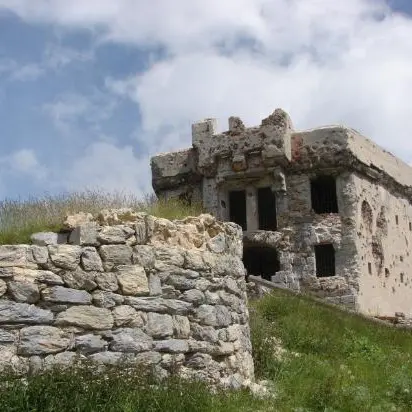
The Trois Communes redoubt (2,080 m).
At the end of World War II, in April 1945, the massif was defended by the German 34th Infantry Division and mountain troops entrenched in a network of fortifications on a series of hilltops: Fort de la Forca (2,078 m), the Trois-Communes redoubt (2,080 m, built on a peak at the border of the municipalities of Breil-sur-Roya, Saorge, and La Bollène-Vésubie), the Plan-Caval fortification (1,932 m), and the Mille Fourches Fort (2,042 m). From April 10 to 28, 1945, units of the 1st Free French Division (DFL) launched an assault on the German positions from the south. After fierce fighting, the Mille Fourches Fort fell on April 11, 1945, followed by the Forca Fort and the Plan-Caval fortification. Finally, on April 12, the Trois-Communes redoubt was stormed by a tank supported by five volunteer soldiers. The entire German front collapsed on April 24, 1945.
