






Description
The Safranier neighbourhood, centred on the square of the same name, is bounded by Rue de la Tourraque, Rue de la Pompe and Rue du Haut Castelet. It is a small, typical neighbourhood in the old town of Antibes.
First recorded in 1604, the Place du Safranier, situated in a cove, provided shelter for fishermen.
The origin of the name ‘Safranier’ remains unclear today, it may derive from:
- the sailor’s saffron
- the spice, saffron, which was cultivated in the surrounding area,
- ‘Safre’, a Provençal word for a mixture of sand and clay of marine origin, which may have coloured the façades of the houses
- ‘Safrané’, a Provençal word meaning a disreputable place.
This neighbourhood is notable for having established itself as a ‘Free Commune’ in 1966, comprising around 2,000 inhabitants.
The aim of the “Free Commune” is to preserve traditions, culture and the bonds between residents. Numerous traditional festivals are held there throughout the year, such as “La fête des Vendanges”, “La Bûche de Noël”, the “Boules Carrées” competition, and dances…
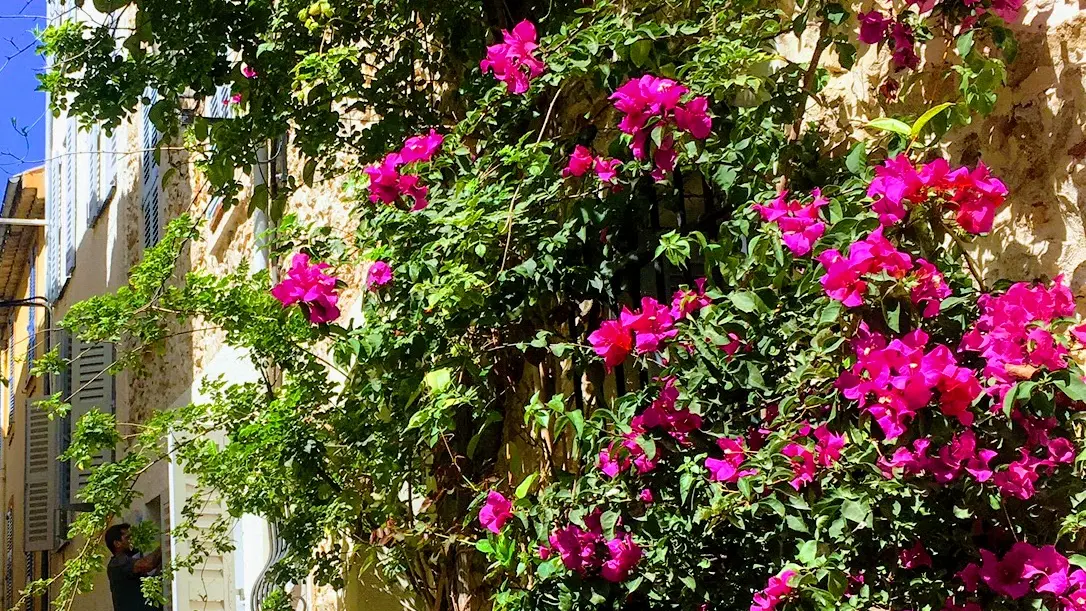
Its pedestrianised alleyways, lined with stone village houses, are quiet and adorned with flowers.
The neighbourhood is also home to:
- The very pretty Villa Fontaine, bequeathed to the town of Antibes in 1990 and dedicated to hosting artists in residence.
- Place Nikos Kazantzakis, named in 1978 in honour of the Greek poet and writer who lived for several years in Antibes Juan-les-Pins (part of which was in this neighbourhood).
Rates
Free access.
—
Openings
All year 2026 - Open everyday
Location
Plan interactif : 1 lieux répertoriés.
- Lieu sans nom
Spoken languages
Spoken languages

Environment
Environment
- Town location
- In the historic centre
- In centre of town
- Pedestrian area


