Mimosa Cote D Azur France Tourism Soumaya BoussadounMimosa Cote D Azur France Tourism Soumaya Boussadoun
©Mimosa Cote D Azur France Tourism Soumaya Boussadoun|Cote D Azur France Tourisme Soumaya Boussadoun

The Mimosa route

8-step sensory itinerary

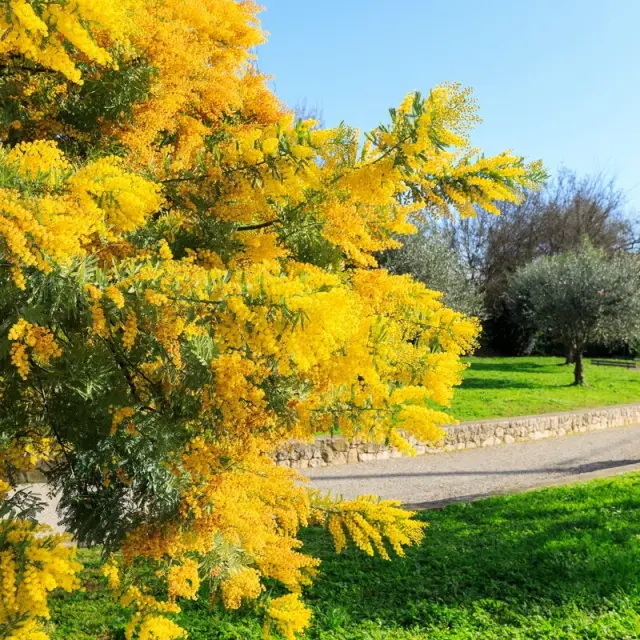
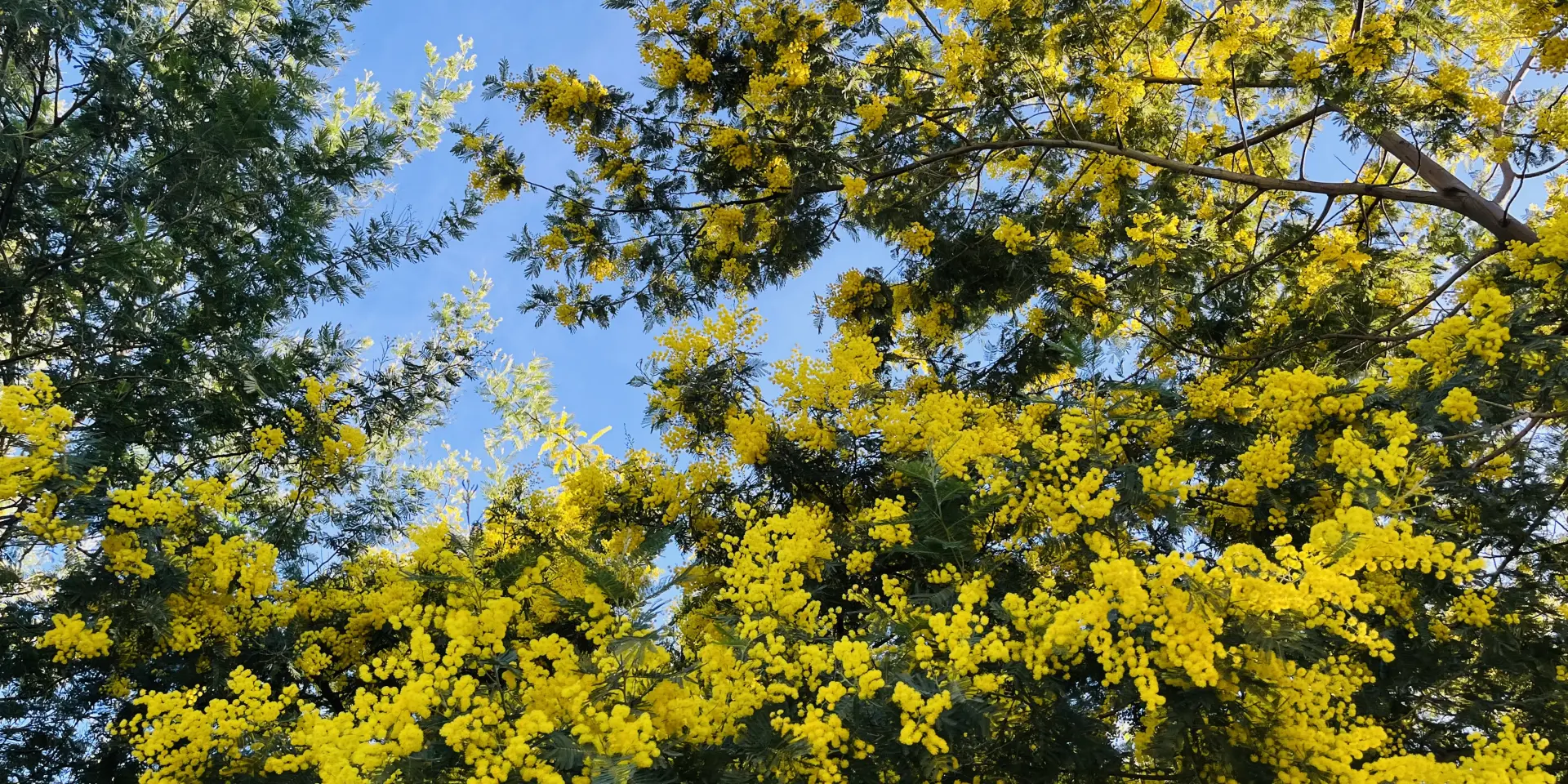
Starting in Bormes-les-Mimosas, the Route du Mimosa invites you to discover this little yellow flower, the symbol of a winter Côte d’Azur. It’s a 130-kilometre tour from January to March, at the height of the flowering season, between the Var and the Alpes-Maritimes. The route passes through eight emblematic stops, including three communes in the Alpes-Maritimes – Mandelieu-La Napoule, Pégomas and Grasse – three unmissable stops.

Bormes-les-Mimosas

Kilometre 0

This is where it all begins. Bormes-les-Mimosas officially adopted its name in 1968, in homage to the ubiquitous flower on its hills and plains. A flower-filled village with picturesque lanes, it is the natural starting point for the route and embodies the spirit of the route: the mimosa is not just a flower here, it’s a way of life.

The village is home to the Cavatore nurseries, a national reference with almost 250 varieties and an arboretum of 120 species, the only national collection protected by the Conservatoire des collections végétales spécialisées. Every year, the Corso fleuri – the oldest on the Côte d’Azur, created in 1920 – brings thousands of visitors together around floats decorated with tonnes of yellow sprigs and fresh flowers. Shortly before, Mimosalia, a meeting place for plant and garden lovers, opens its doors at the end of January to celebrate botanical diversity and sustainable know-how.

On the sweet side, mimosa ice cream, jelly, homemade syrup and the “Mimorose” cocktail all bear witness to deep-rooted local creativity.
Rayol-Canadel-sur-Mer

Kilometre 15

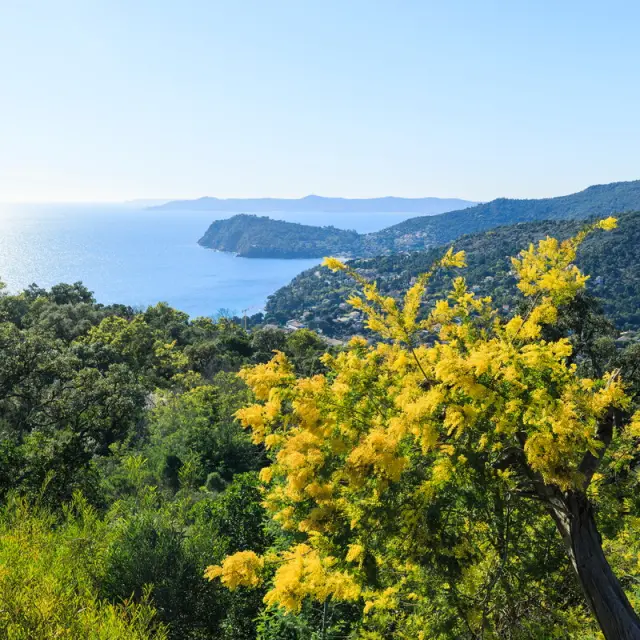
Rayol-Canadel-sur-Mer was founded in 1925 and became an independent municipality in 1949. It boasts four kilometres of coastline between hills and blue horizons. The Corniche des Maures plunges into the Mediterranean with a unique view of the Îles d’Or.

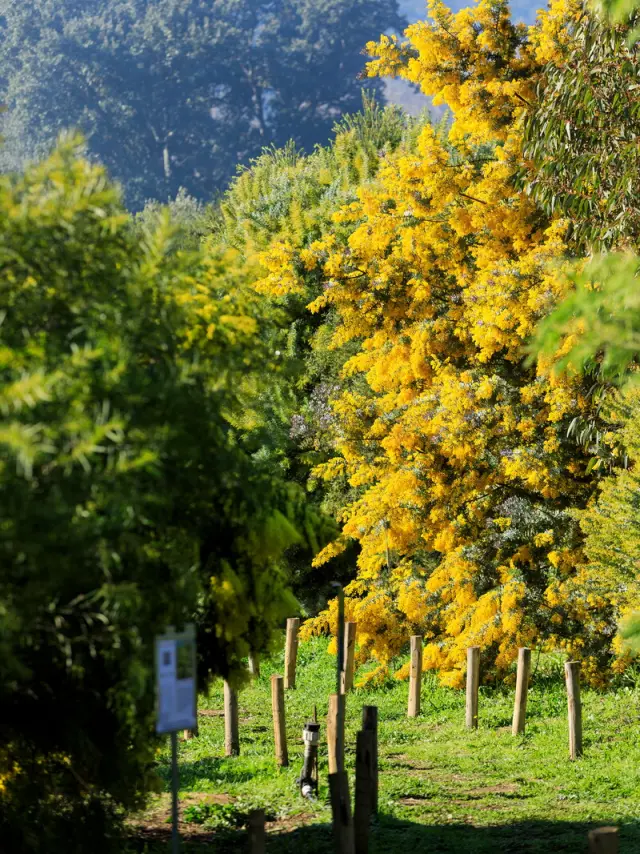
From January to March, the mimosa lights up the landscape and adorns the Domaine du Rayol – the Garden of the Mediterranean – designed by Gilles Clément. This extraordinary garden brings together plant landscapes from all over the world, including an Australian quarter dedicated to acacias and their various varieties of mimosa. France’s largest nature bookshop, Librairie des Jardiniers, offers books and souvenirs on the theme of the mimosa, and is freely accessible without a garden ticket. At the Café des Jardiniers, seasonal cuisine is also adorned with mimosa during the flowering season.

Sainte-Maxime

Kilometre 42

Between land, sea and Provence, Sainte-Maxime is a family-friendly destination with 11 kilometres of Mediterranean coastline. Its old-tiled houses, typical market and lively shopping streets exude Provencal authenticity. Just a stone’s throw from the coast, the Maures mountains invite you to get away from it all, with their cork oaks, umbrella pines, arbutus trees and mimosas that colour the hills in winter.

Every year in February, the town celebrates the mimosa with its Corso: floral floats, musical groups, confetti and yellow sprig battles create a joyous and popular atmosphere in the town centre. Since 1983, the La Muscadine chocolate factory has been offering chocolate creations with delicate notes of flowers and mimosa. The tourist office shop offers a whole range of mimosa products: syrup, jelly, candles, soaps and a plantation box to take a fragment of the region home with you. In addition, “Belle Époque” guided tours show how the mimosa, introduced to the Côte d’Azur in the second half of the 19th century by winter guests, helped to shape the identity of the destination.

Saint-Raphaël

Kilometre 59

A listed resort at the gateway to the Massif de l’Estérel, Saint-Raphaël boasts an unspoilt coastline and contrasting landscapes: 34 kilometres of coastline, secret coves, the Corniche d’Or carved out of red rock and the legendary Île d’Or. In winter, the mimosa blossoms into a multitude of golden pompons that contrast with the mineral sheen of the volcanic rocks, offering a unique natural tableau for hiking enthusiasts.

The Estérel massif can be explored on foot or in a minivan with experienced guides, on mimosa-themed walks punctuated by tastings of confit de fleur. Coach excursions are also available to explore the flowerbeds in the direction of Mandelieu and Tanneron. As for flavours, Le Palet d’Or in Agay offers original creations based on crystallised mimosa, while Taste Gourmet offers a local mimosa spread and a pastis made in collaboration with Maison Ferroni.

Mandelieu-La Napoule

Kilometre 108

Nicknamed the ” Mimosa Capital “, Mandelieu-La Napoule has been celebrating the golden flower since 1931 – a popular and festive tradition that spans generations. Nestling between the Mediterranean, the Esterel mountains and the Tanneron forest, Mandelieu offers a full mimosa-themed programme every February, with events, ephemeral installations, creative workshops, visits to forceries, excursions and guided walks in the flower-filled hills.

The Mimosa Festival, a not-to-be-missed annual highlight, brings residents and visitors together for parades, corsos, concerts, a grand banquet and fireworks over five days throughout the town. In the heart of the Emmanuelle de Marande park, the town is home to France’s only mimosa arboretum, with more than 100 species planted over an area of almost 10,000 m², accompanied by an open-air exhibitionLa Saga du Mimosa – which traces the history and development of the cultivation of this flower. As for discoveries, the Capitou district, the historic birthplace of the mimosa growers, bears witness to a lively agricultural past. Food lovers will be delighted by Galimard’s signature “Douceur de Mimosa” fragrance, green tea with mimosa flowers from the Haute Manufacture nunshen, and the mimosa macaroons and ice creations available all year round from Louise.

Tanneron

Kilometre 112

Clinging to its hills planted with mimosa, eucalyptus, olive and chestnut trees, the commune of Tanneron is the beating heart of the massif of the same name – the largest area of wild and cultivated mimosa in France. Its 22 hamlets spread throughout the area give this Var village an authentic, unspoilt character, far from the hustle and bustle of the coast.

Every year at the end of January, the Tanneron Mimosa Festival brings the village together with a Provencal and craft market, folk dance demonstrations, a flower parade and a large-scale mimosa distribution. Throughout the season, guided walks by a naturalist take visitors deep into the yellow forests, while theOustaou dòu païs, the house of mimosa and agriculture, preserves the memory and know-how of the commune. At the Augier forcery, open to the public for the sale and dispatch of bouquets, you can get up close and personal with the craft of mimosa-making. Shops, bakeries and local producers offer a wide range of local products, including syrup, jelly, marshmallows, olive capilotade and mimosa.

Pégomas

Kilometre 115

In Pégomas, the mimosa delights the eye and the nose. Grown in the hills of Tanneron, it is honoured here with care and passion. The Jardin des Mimosas is home to 11 varieties, a testament to the botanical diversity that is carefully nurtured. Pégomas, renowned for its perfume-growing industry, has handed down its horticultural expertise from generation to generation.

Every year at the end of January, Pégomas celebrates the first sprigs of mimosa at a friendly mimosa evening. The town has the pleasant, colourful image of a land of character, halfway between the hustle and bustle of the coastal corsos and the serenity of the Tanneron heights. It’s a place where you can take the time to discover the unspoilt countryside and passionate producers, some of whom now offer direct sales of bouquets and are innovating with new products such as vintage mimosa tea.

Grasse

Kilometre 130

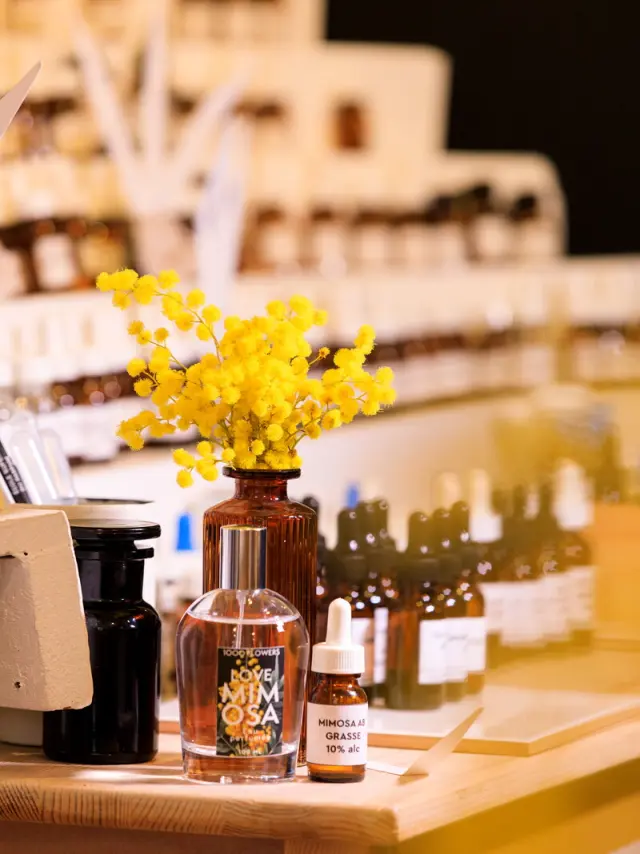
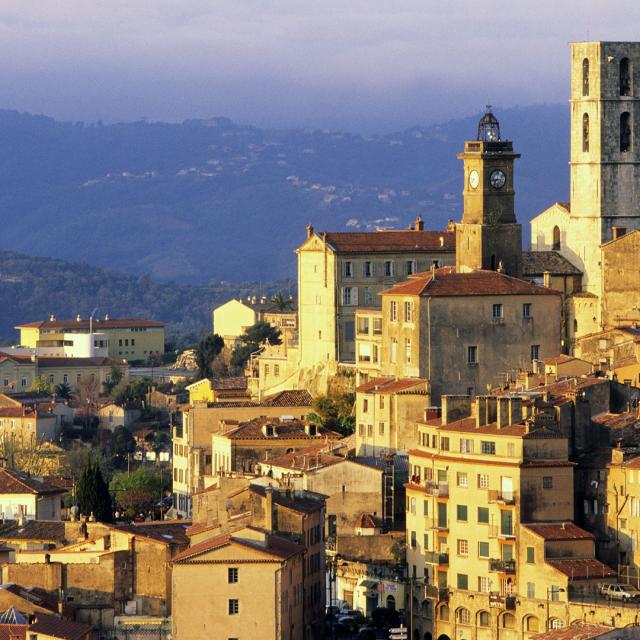
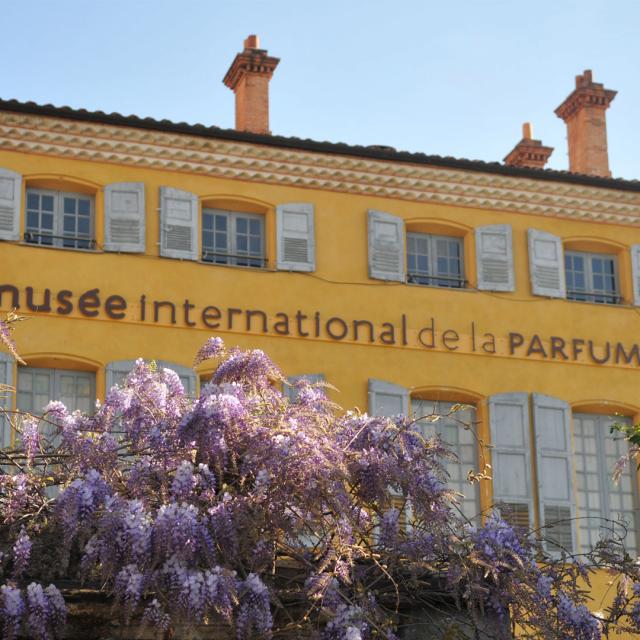
The world capital of perfume, Grasse is the olfactory apotheosis of the Mimosa Route. Situated between the Alps and the Mediterranean, the town’s soul unfolds in its museums, cathedral, town houses and picturesque alleyways adorned with fountains. The Musée International de la Parfumerie traces the history of perfume in all its aspects, from raw materials to contemporary uses.

The three perfume houses in Grasse – Fragonard, Galimard and Molinard – offer guided tours, creative workshops and shops. The mimosa plant has been used in perfumery here since the 19th century: a ” mimosa absolute ” is extracted, highly prized for its powdery, floral and honeyed notes.

From January to March, the Pays de Grasse is decked out in the Route d’Or, offering some lovely walks along the Siagne. The ” Perfumed Paths ” offer unique immersive experiences, combining picking, distillation and olfactory composition in the heart of the mimosa and perfume plants of the region. Chocolaterie Maison Duplanteur and Confiserie Florian complete this gourmet and sensory stopover, bringing a 130-kilometre journey under the sign of golden yellow to a beautiful close.